
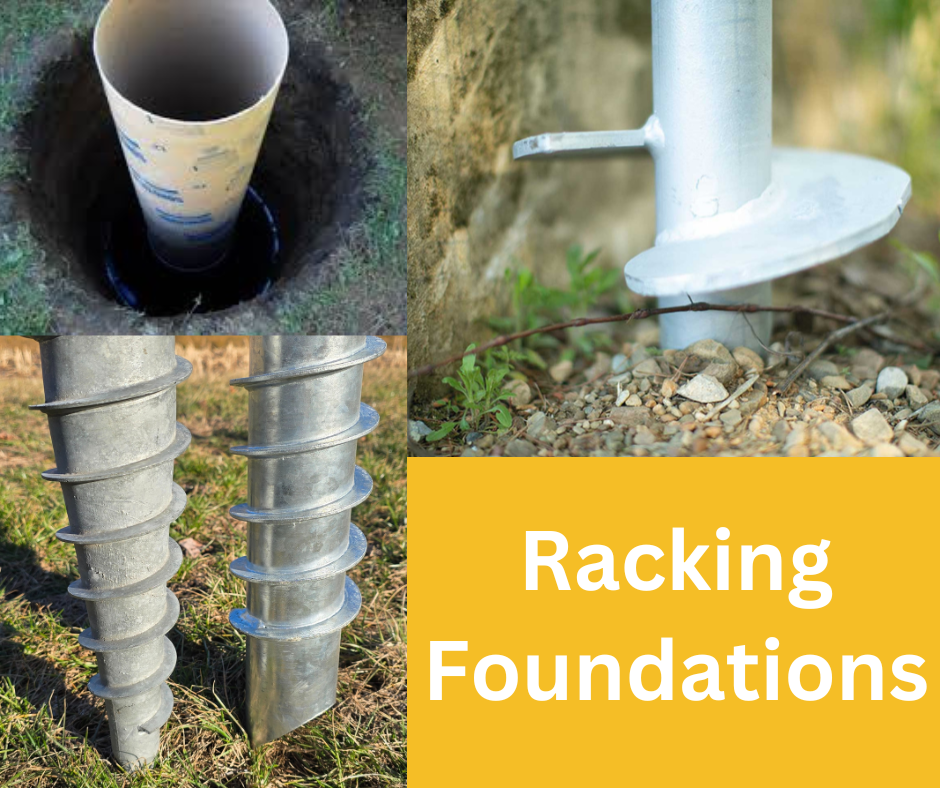
Concrete | Helical Piles | Ground Screws
When planning a ground mount solar installation, one of the most important decisions happens below the surface — choosing the right foundation system. The stability, performance, and long-term success of any array depend on a solid foundation that aligns with site conditions, project scale, and budget.
Here’s a closer look at three of the most common foundation types used in solar construction: concrete, helical piles, and ground screws — each with its own strengths and concerns.
Concrete Foundations
Concrete is a widely used and time-tested foundation option, particularly in large-scale or jurisdictionally strict projects. It offers strong structural support and is generally accepted by permitting authorities across the country.
Notable Benefits:
- High load-bearing capacity
- Familiarity and acceptance in most permitting processes
- Material availability in most regions
Project Concerns: Concrete requires soil excavation and formwork, which increases labor demands. It is also weather-dependent during installation and requires curing time before building can begin. Potential frost heaving can be a factor. Environmental impact is another factor, as concrete is more difficult to remove and less sustainable than other options.
SFUSA does not use concrete foundations for projects.
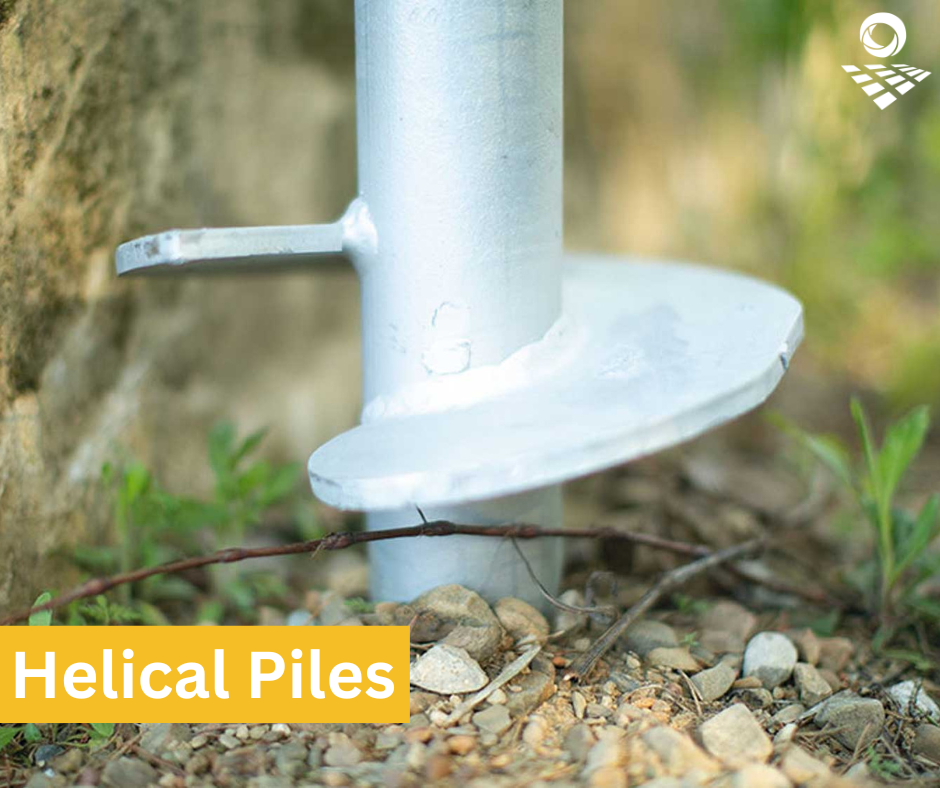
Helical Piles
Helical piles are steel shafts with welded helical plates that are mechanically “screwed” into the ground. They’re an increasingly popular choice in solar construction due to their speed and flexibility, particularly on sites with varying soil conditions.
Notable Benefits:
- Fast installation and immediate build-readiness
- Minimal site disturbance and no need for concrete
- Removable and reusable
- Strong performance in a range of soil types
- Long lifespan with proper materials and coatings
Project Concerns: Helical piles require specialized equipment and trained crews. In some cases, subsurface conditions such as large rocks or obstructions can lead to pile refusal, requiring an alternate solution or adjustment.
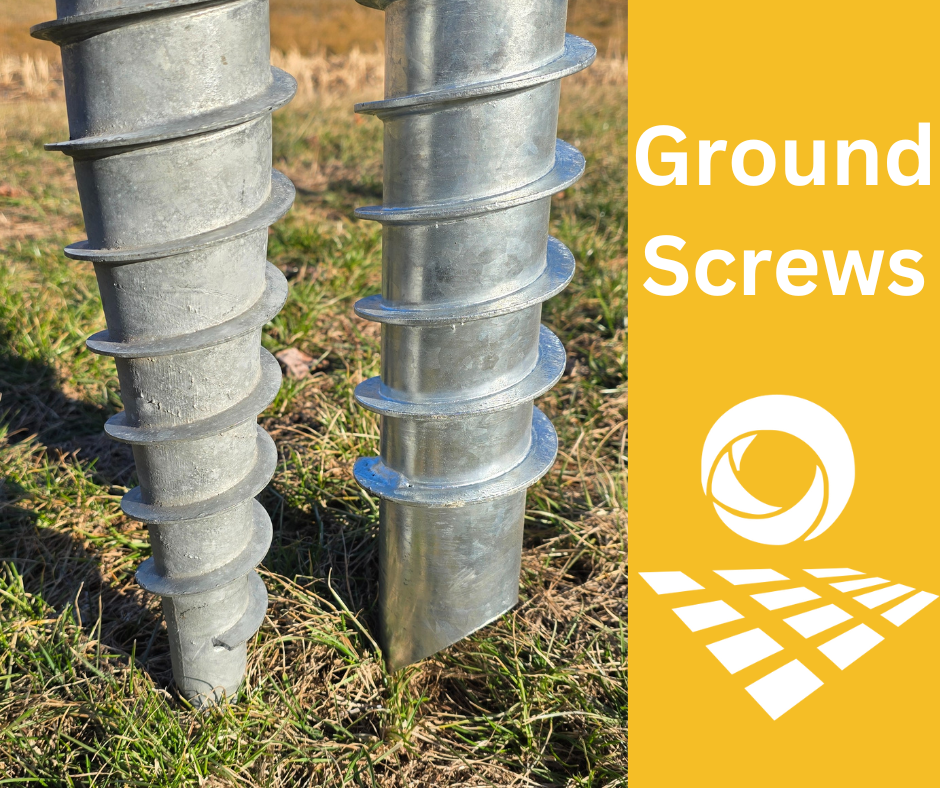
Ground Screws
Ground screws are similar in function to helical piles but are specifically designed to perform well in rocky, compact, or shallow soils. They are mechanically driven into the ground and are often favored in projects with difficult terrain or tighter environmental restrictions.
Notable Benefits:
- Quick, concrete-free installation
- Effective in rocky or shallow soils
- Removable and reusable
- Minimal environmental impact
- Long service life with corrosion protection
Project Concerns: Ground screws require specialized installation tools. Proper design and testing are important to ensure compatibility with the project’s structural needs.
Final Thoughts
Each foundation system has its place in solar construction, and selecting the right one depends on a mix of factors: site conditions, permitting requirements, structural loads, timeline, and long-term sustainability goals.
Understanding how each foundation option performs helps project teams make informed decisions from the ground up — ensuring the solar array is built to last.